Abstract
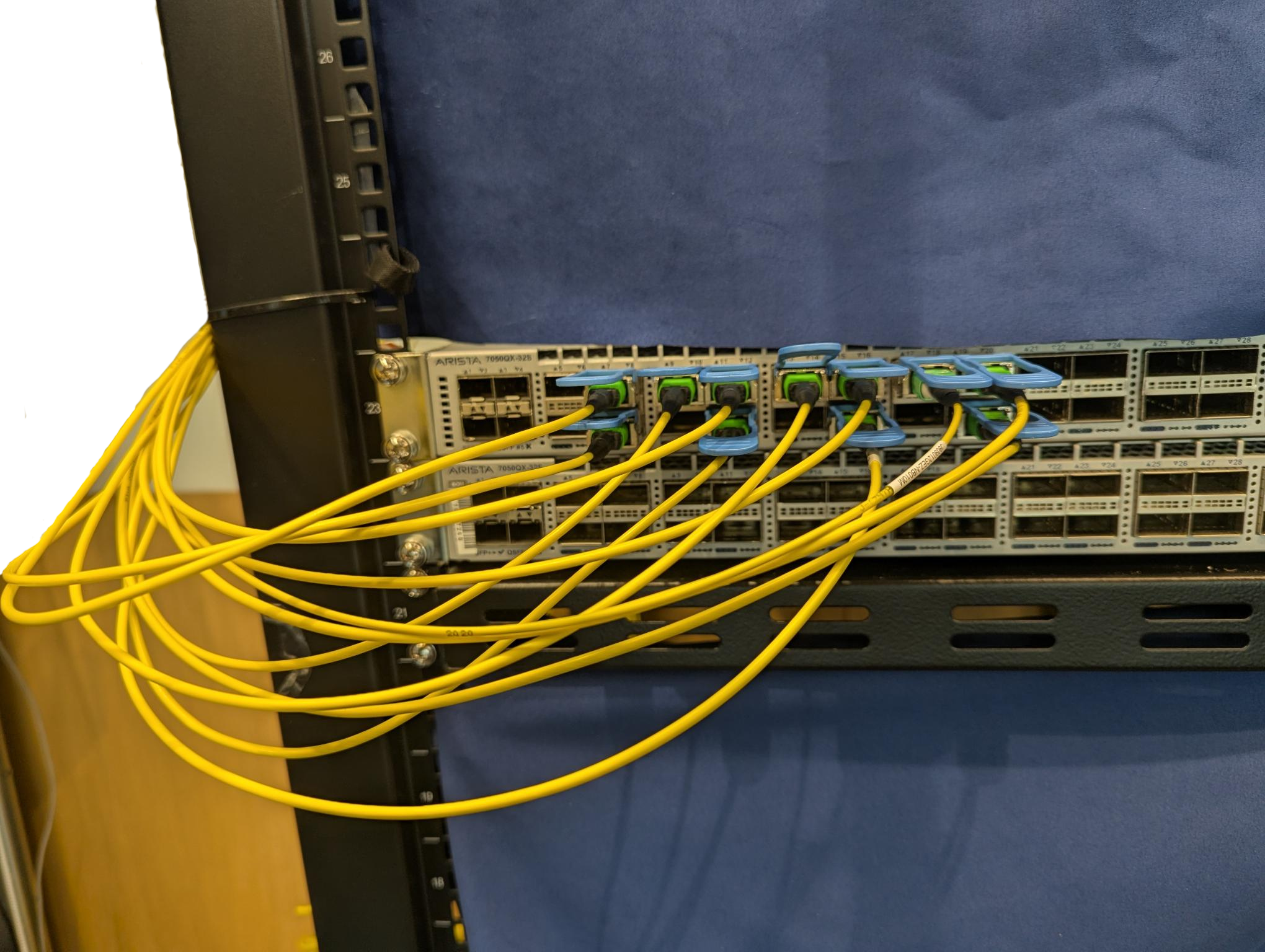
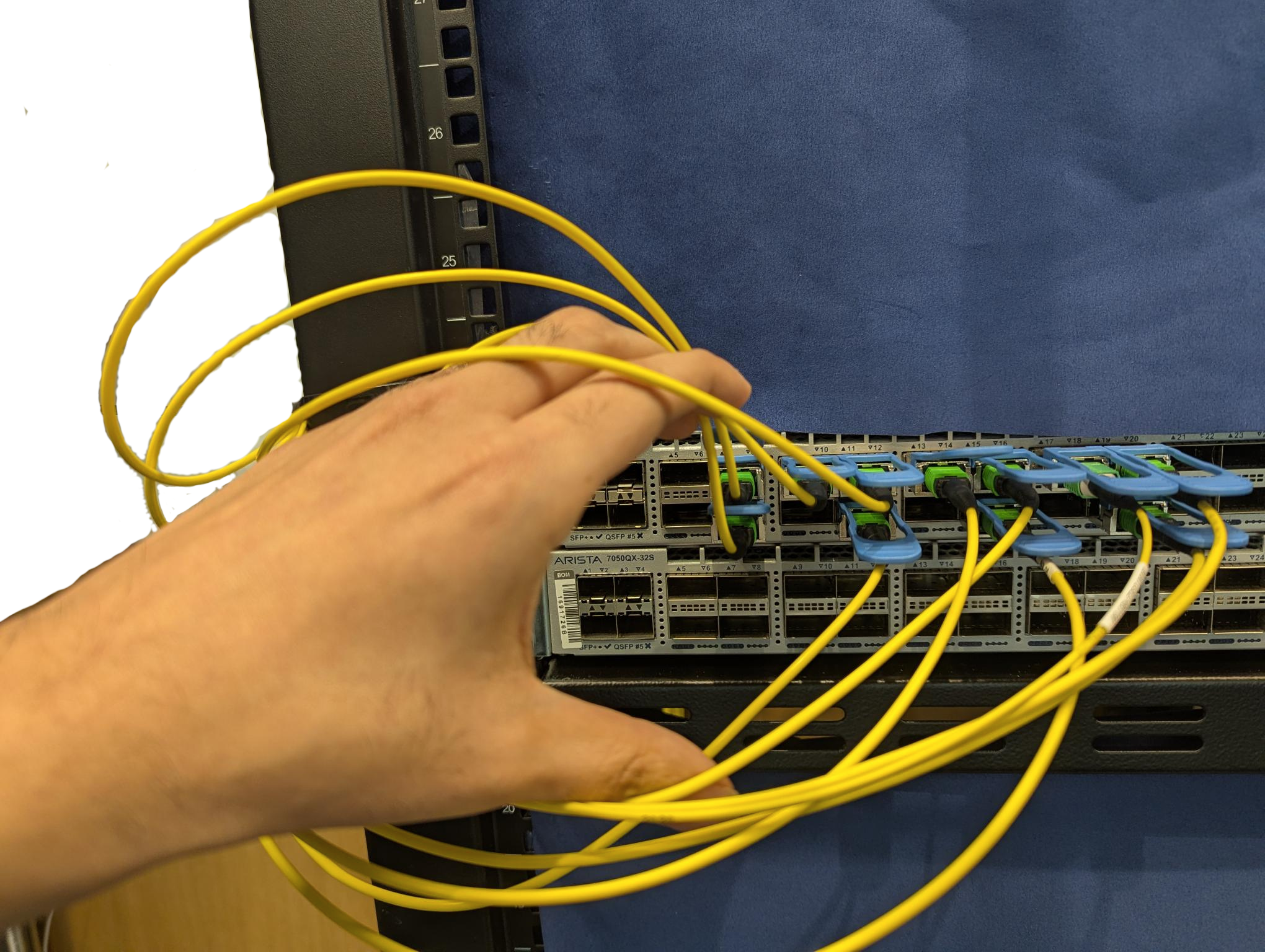
Automating repair and maintenance tasks in datacenters requires robots to operate in dense cable environments where overlapping cables occlude target components and must be displaced without damage. Traditional prehensile approaches are impractical here due to the difficulty of isolating individual cables and the risk of entanglement. We present a non-prehensile cable parting approach using a chopstick-inspired tool that slides between cables and creates localized clearance around a target transceiver port. The tool and motion primitives are designed to enable safe cable displacement without explicit force sensing or cable-specific planning. We evaluate the approach across randomized cable configurations in both a MuJoCo physics simulation and real-world experiments using a dual-arm UR5e system, where one arm declutters cables and a second arm inserts a transceiver into the cleared port. Successful end-to-end transceiver insertion is achieved in the integrated multi-robot pipeline.
Key contributions
Chopstick tool
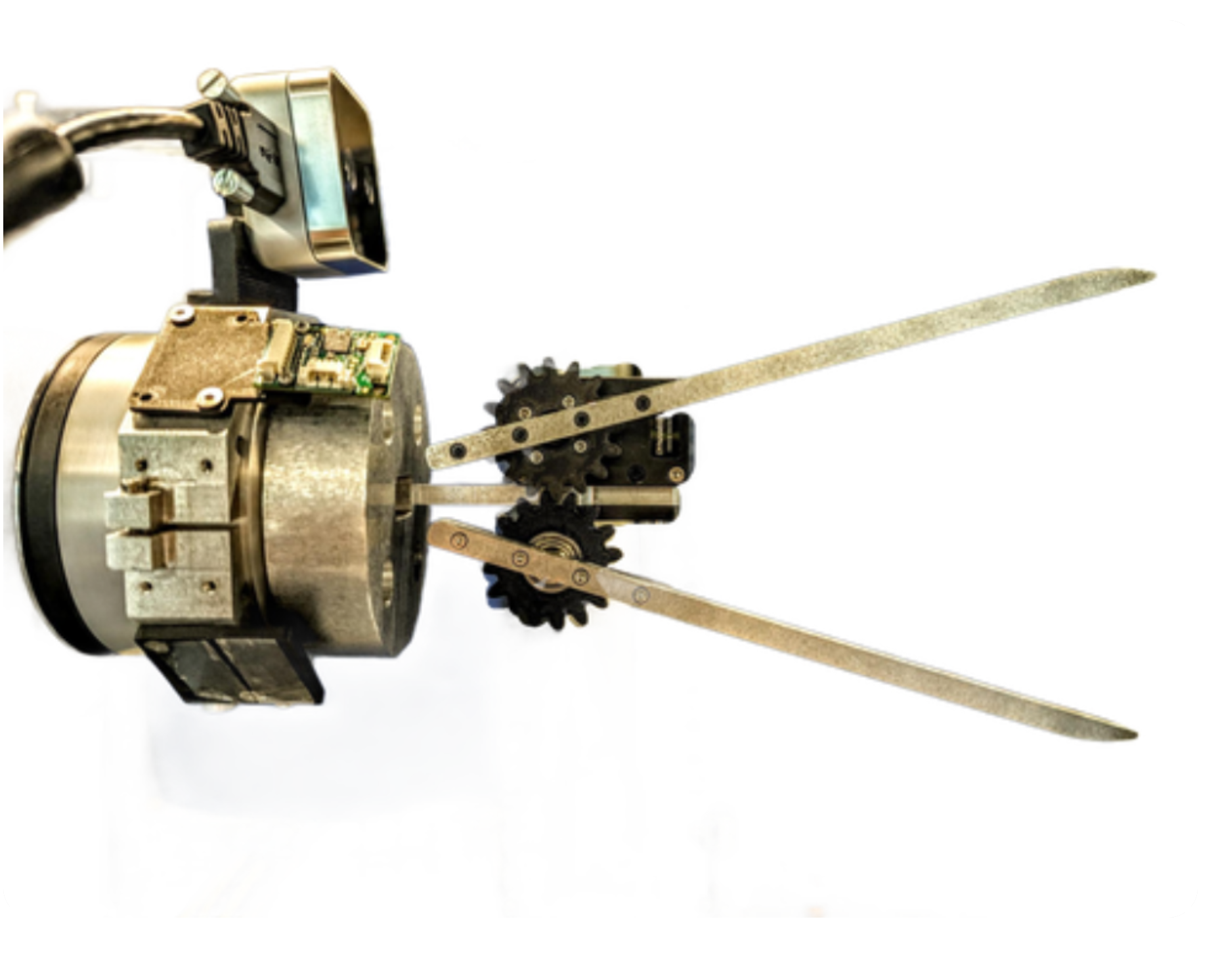
A tapered two-prong tool that gently parts dense, fragile cables without grasping them.
Motion primitives
Four modular primitives — Insert, Rotate, Comb, Open — composed into interpretable policies.
Real-world validation
Sim + dual-arm UR5e experiments reaching 100% clearance and end-to-end transceiver insertion.
The chopstick tool
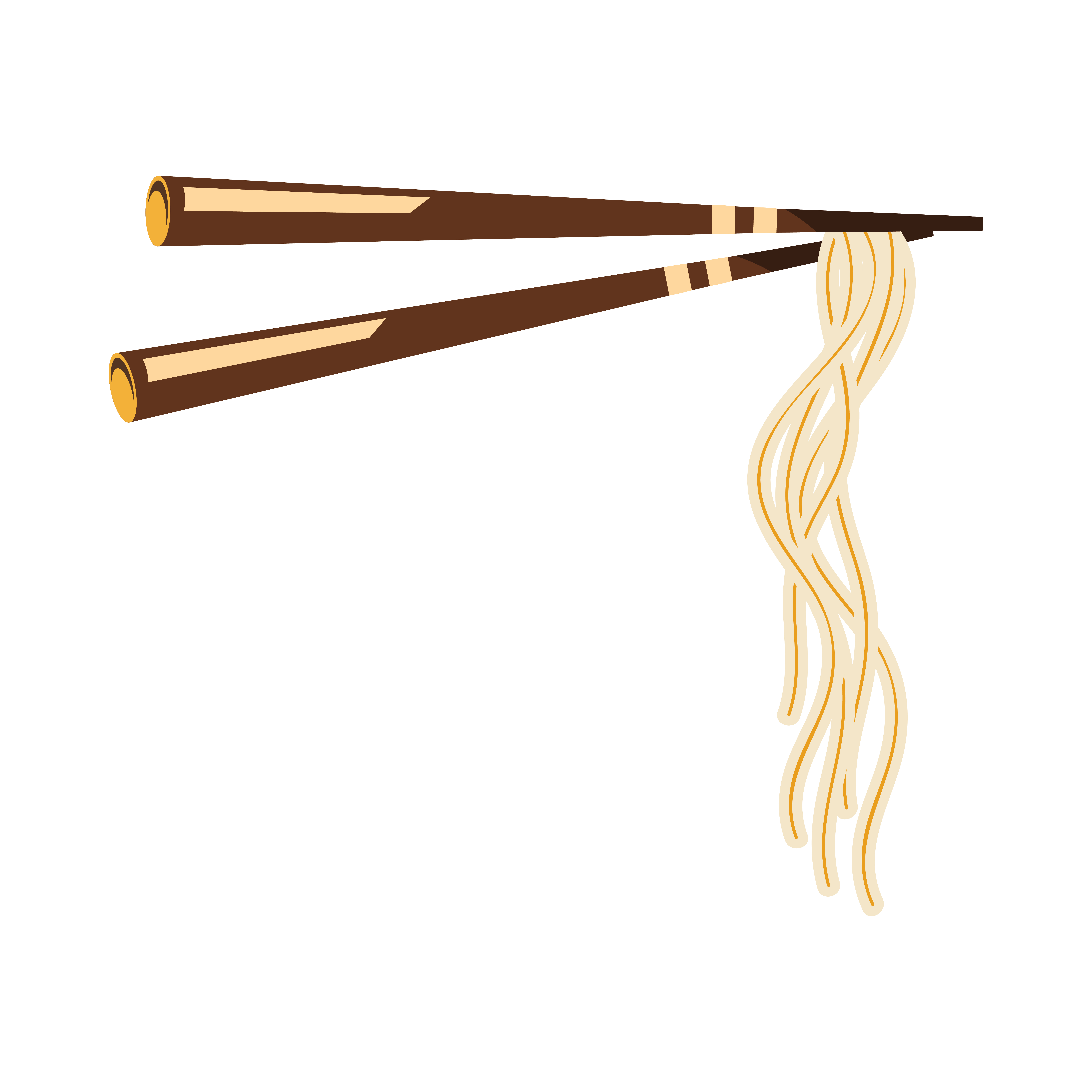
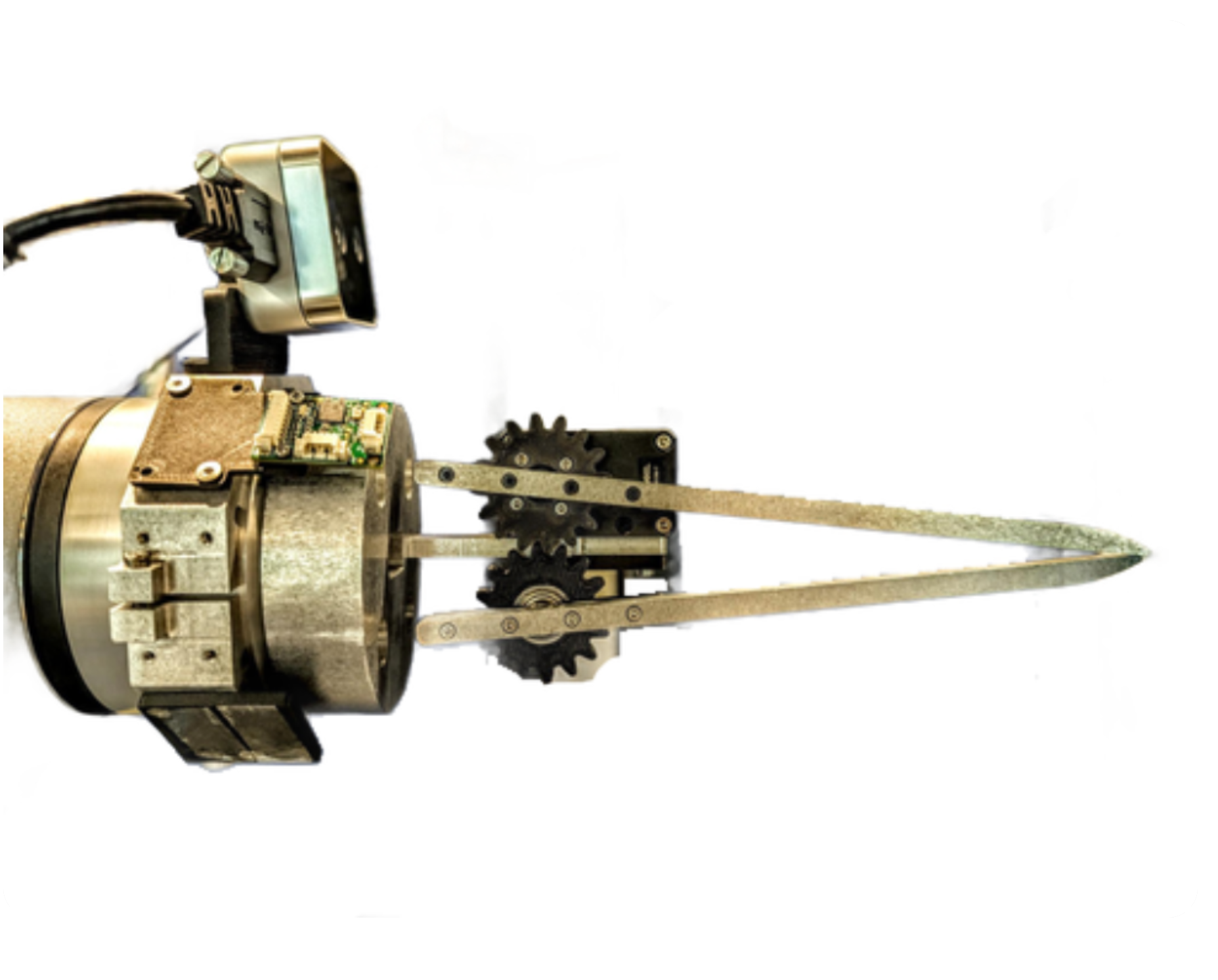
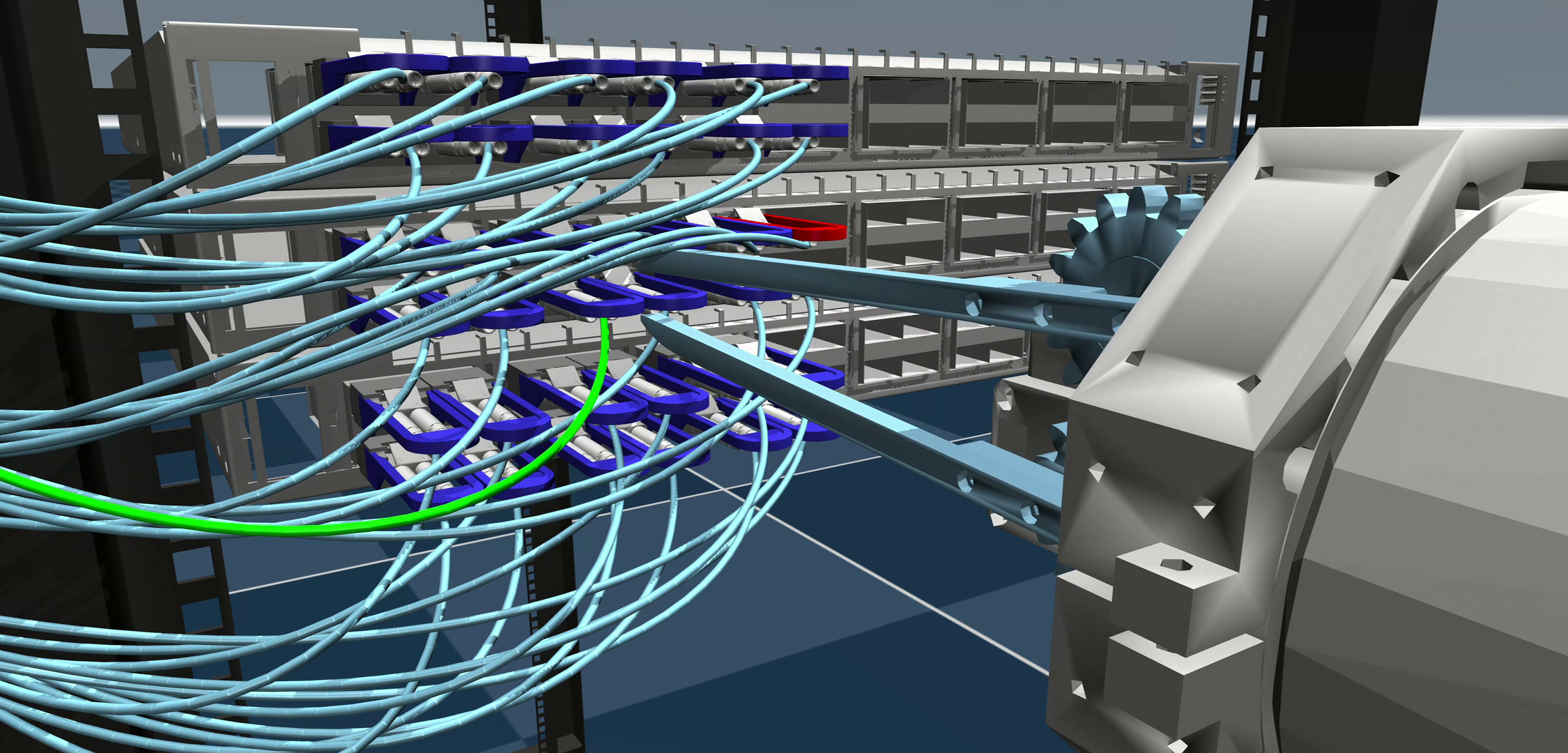
Rather than relying on precise end-effector force sensing — which becomes intractable with many simultaneous cable contacts — we simplify the interaction through tool design. The end-effector consists of two parallel prongs actuated by a servo hinge, with tapered tips to slide between packed cables, a reach tuned to enter dense bundles without wrist collisions, and a parallel opening that separates cables evenly along its length.
Motion primitives
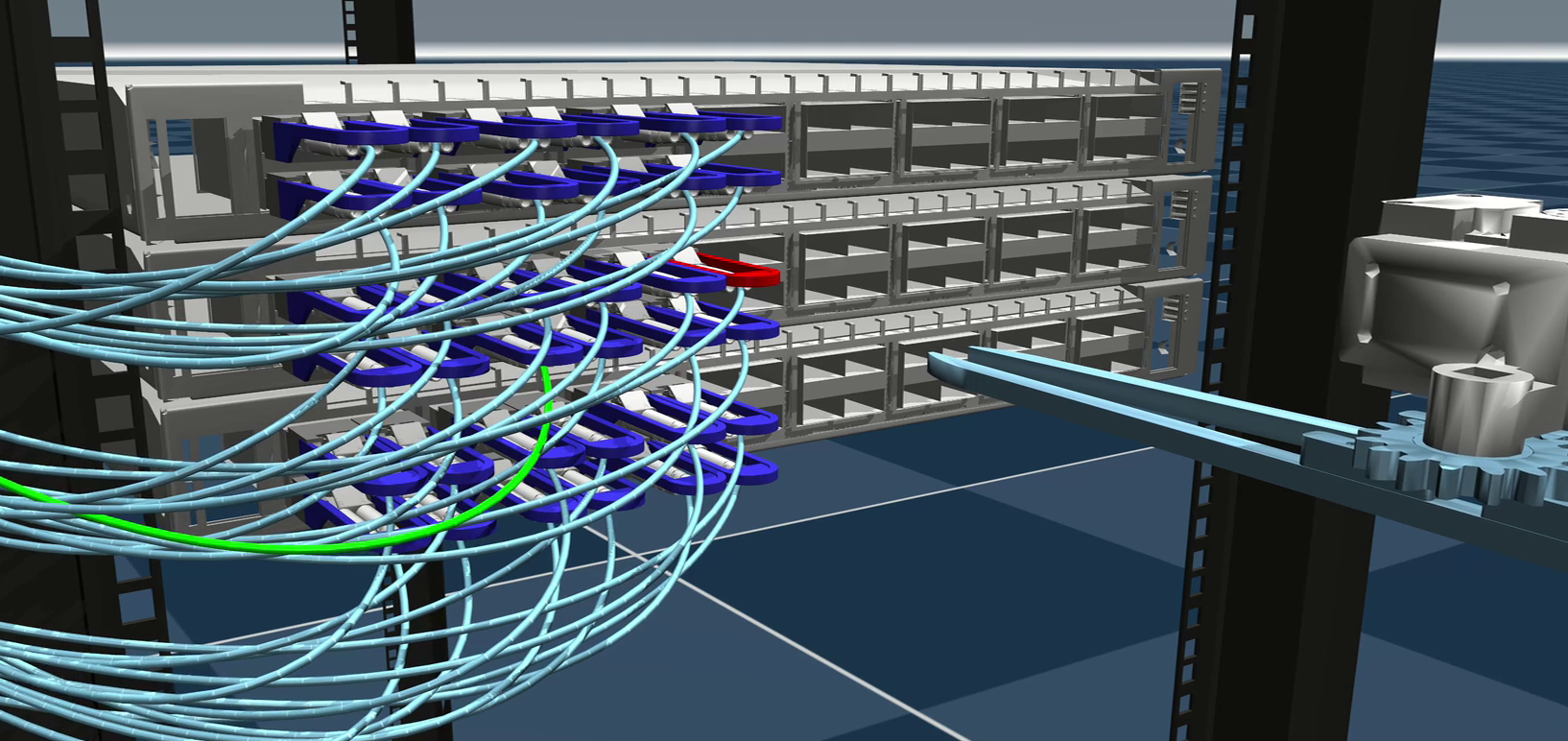
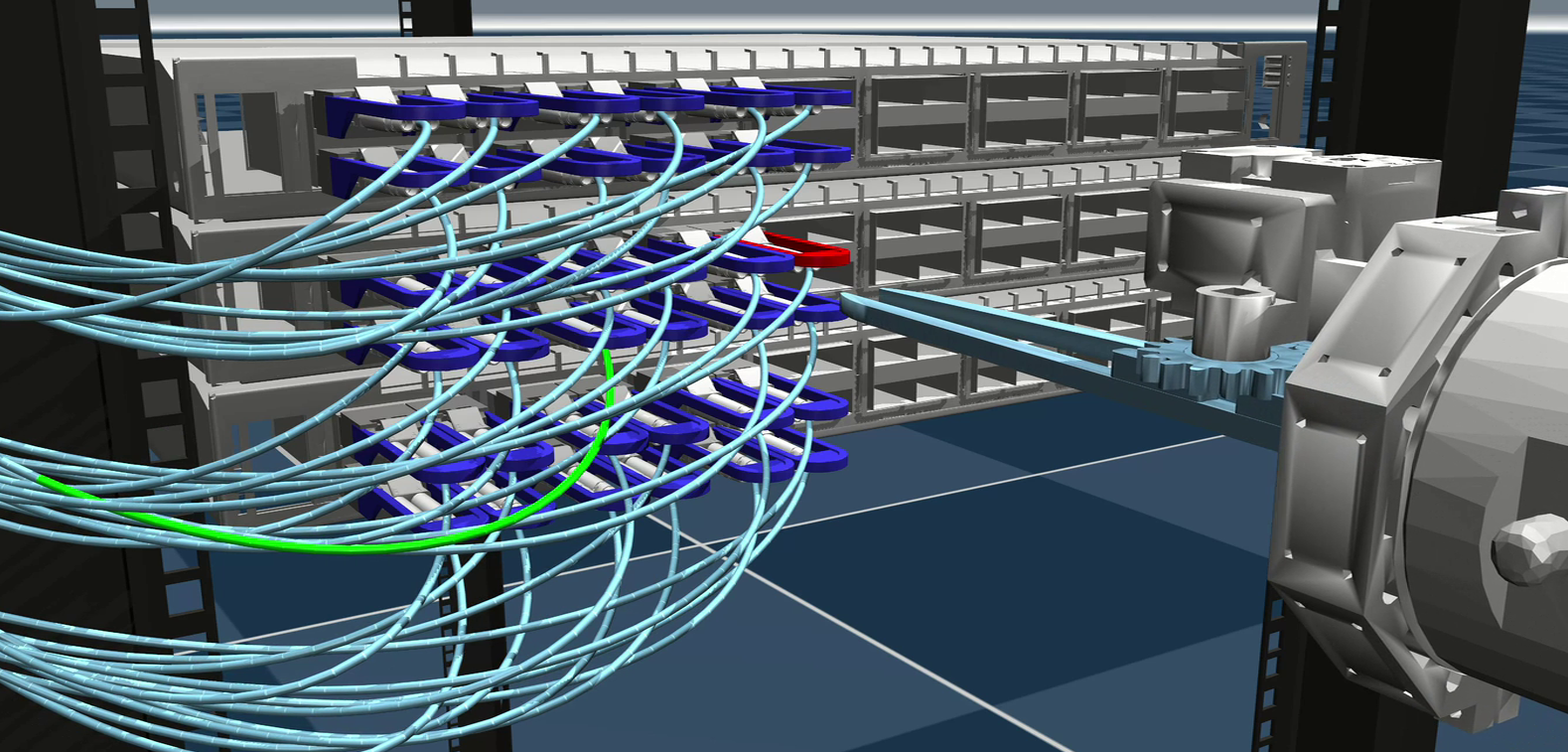
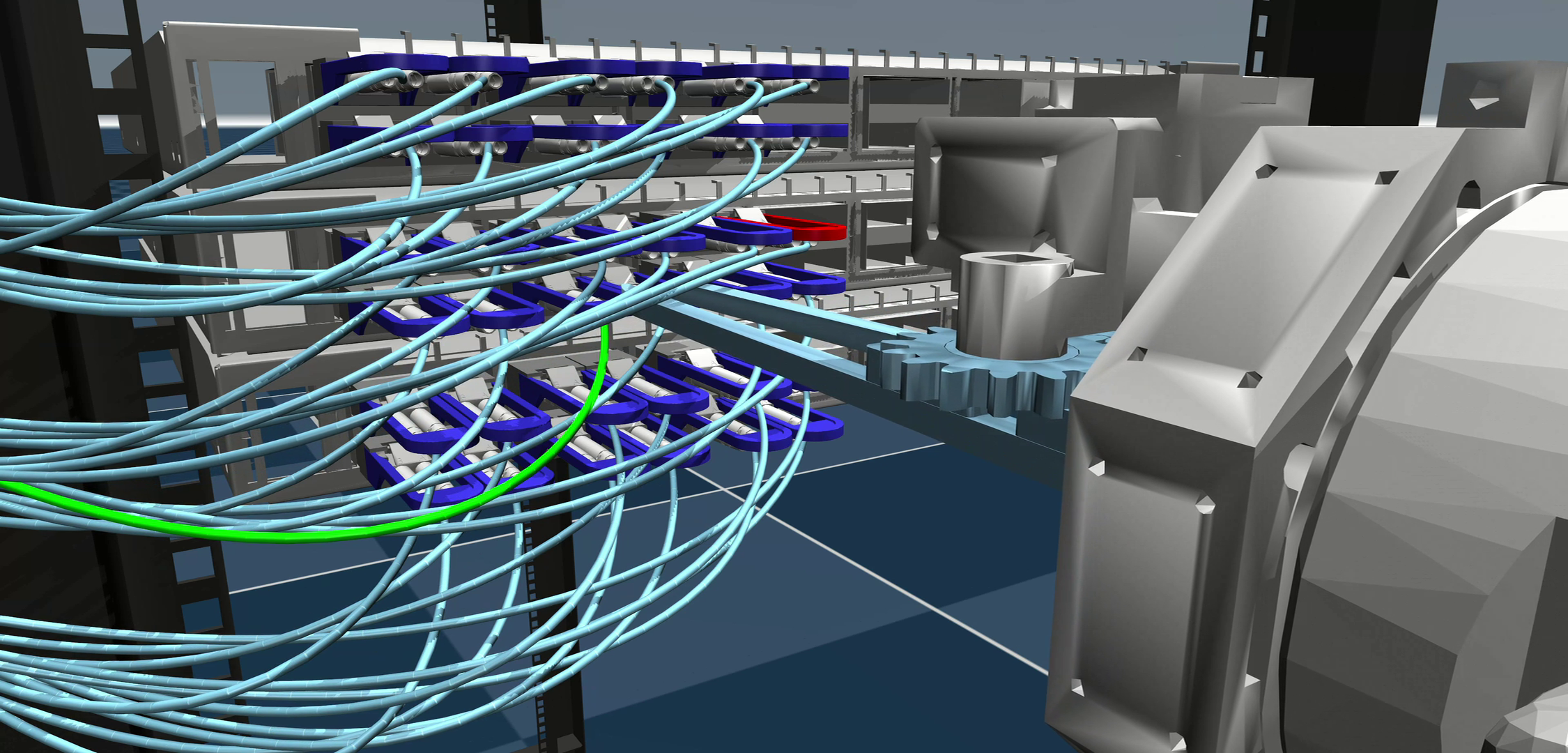
Instead of planning over continuous cable state, manipulation is decomposed into four modular primitives. Every policy begins with Insert and ends with Open; the intermediate primitives vary.
Policies
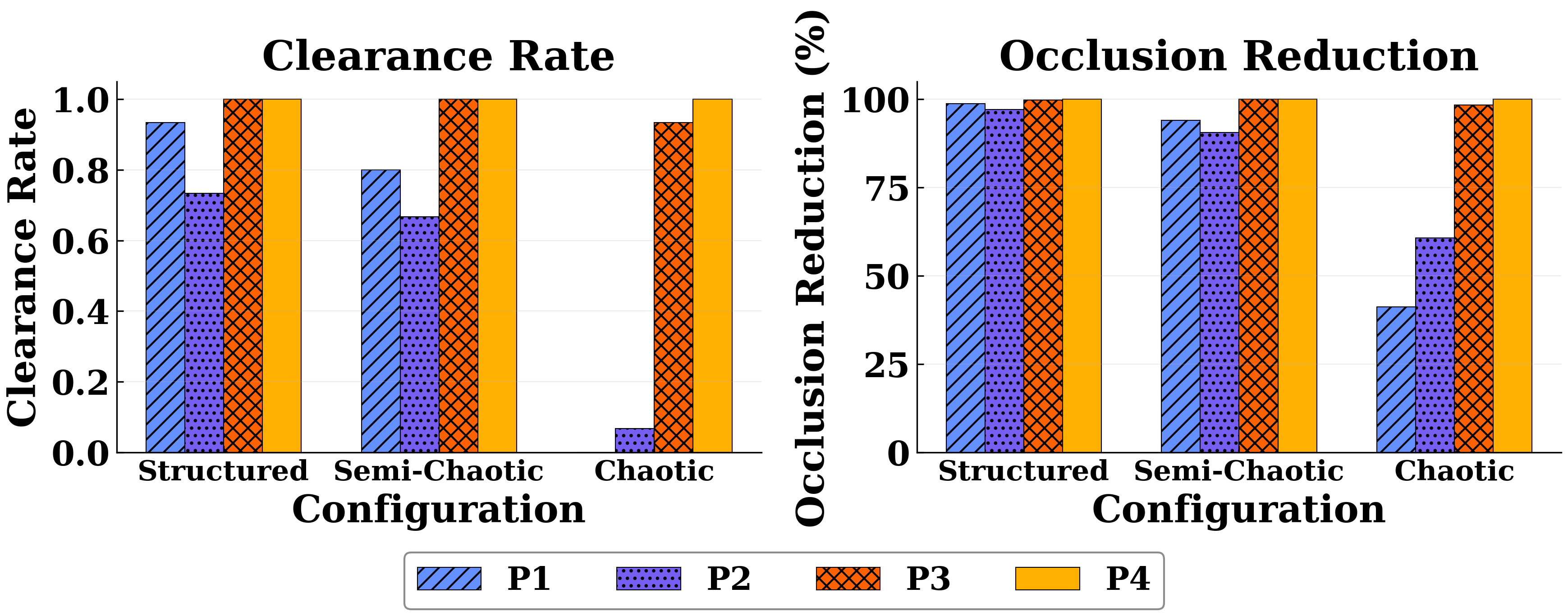
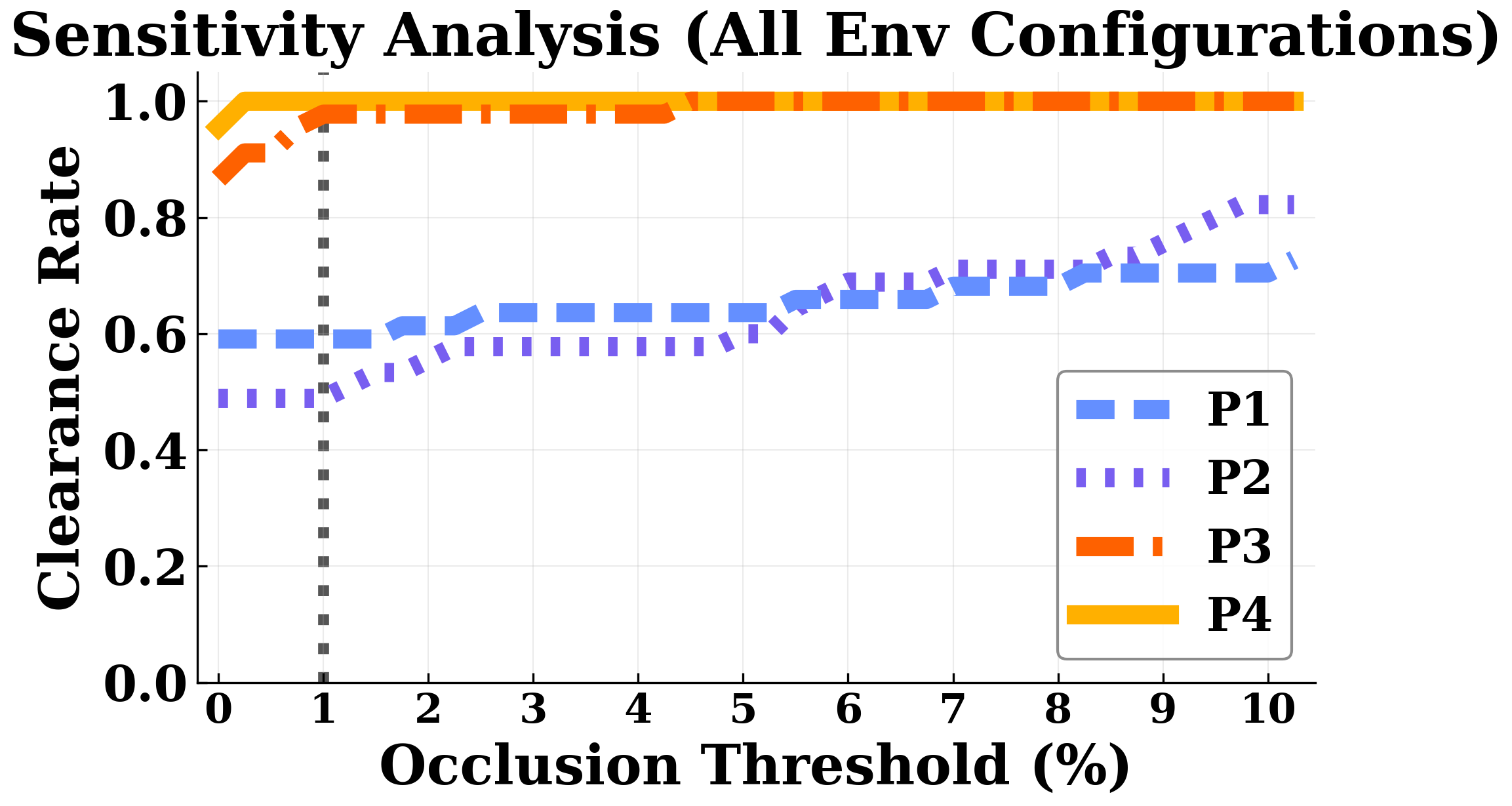
The Comb primitive is the critical differentiator: by laterally separating overlapping cables before opening, policies P3 and P4 stay robust even in chaotic configurations.
Experimental setup
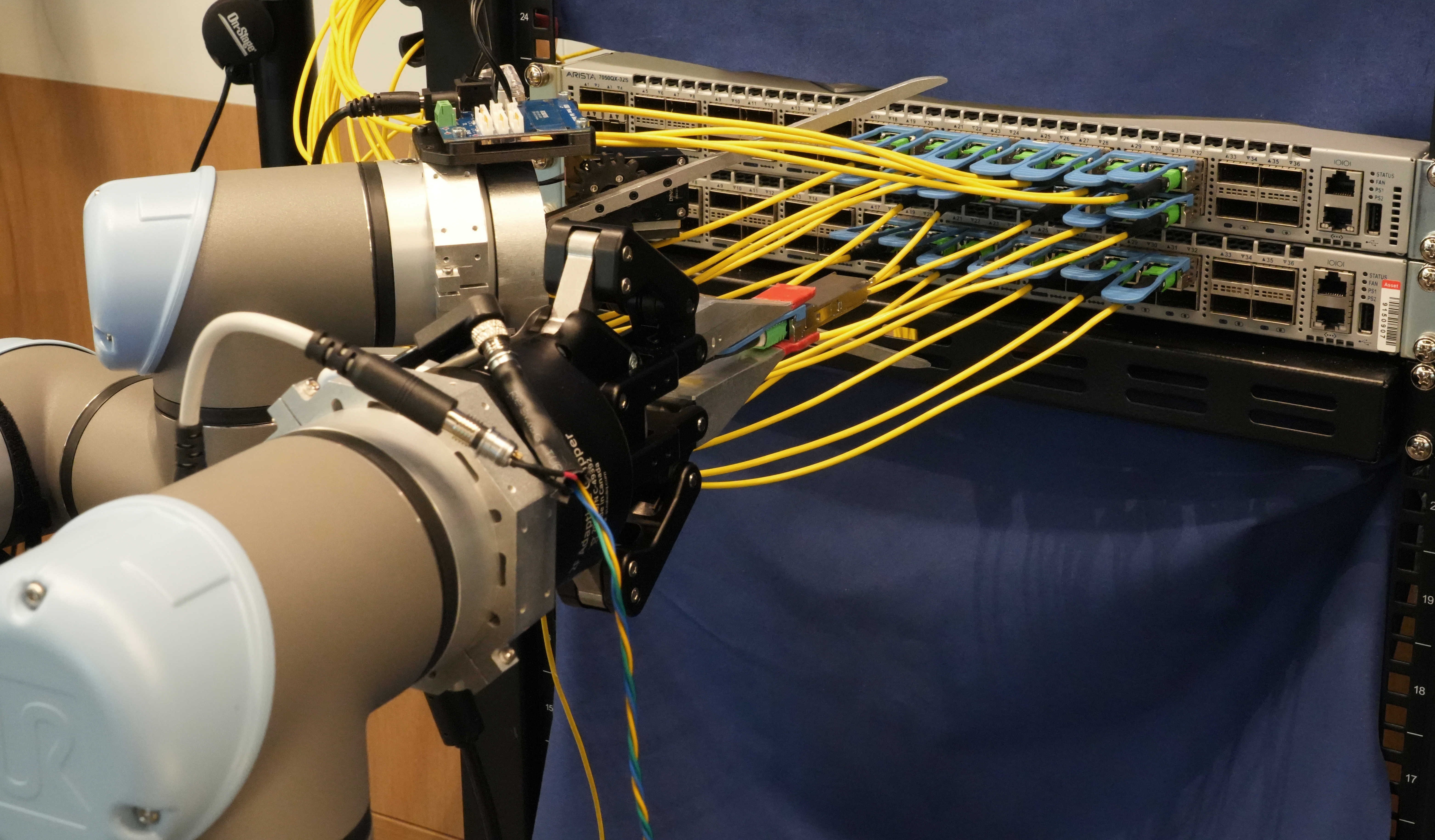
A dual-arm system with two Universal Robots UR5e manipulators on a shared base: one carries the chopstick tool for decluttering, the other a Robotiq 2F-85 gripper for insertion, in front of an ARISTA 7050QX-32S switch populated with QSFP transceivers and fiber optic cables.
Environment classes
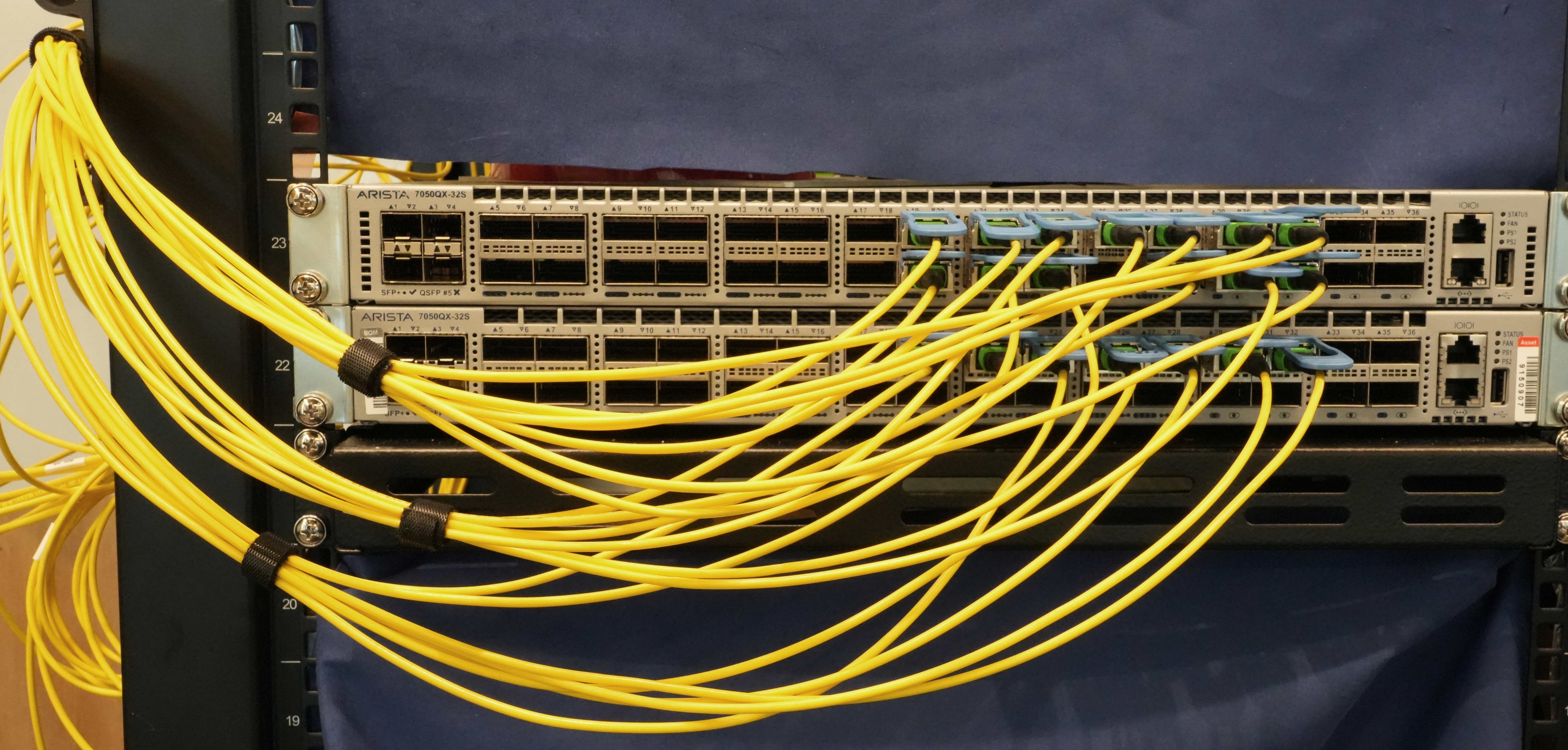
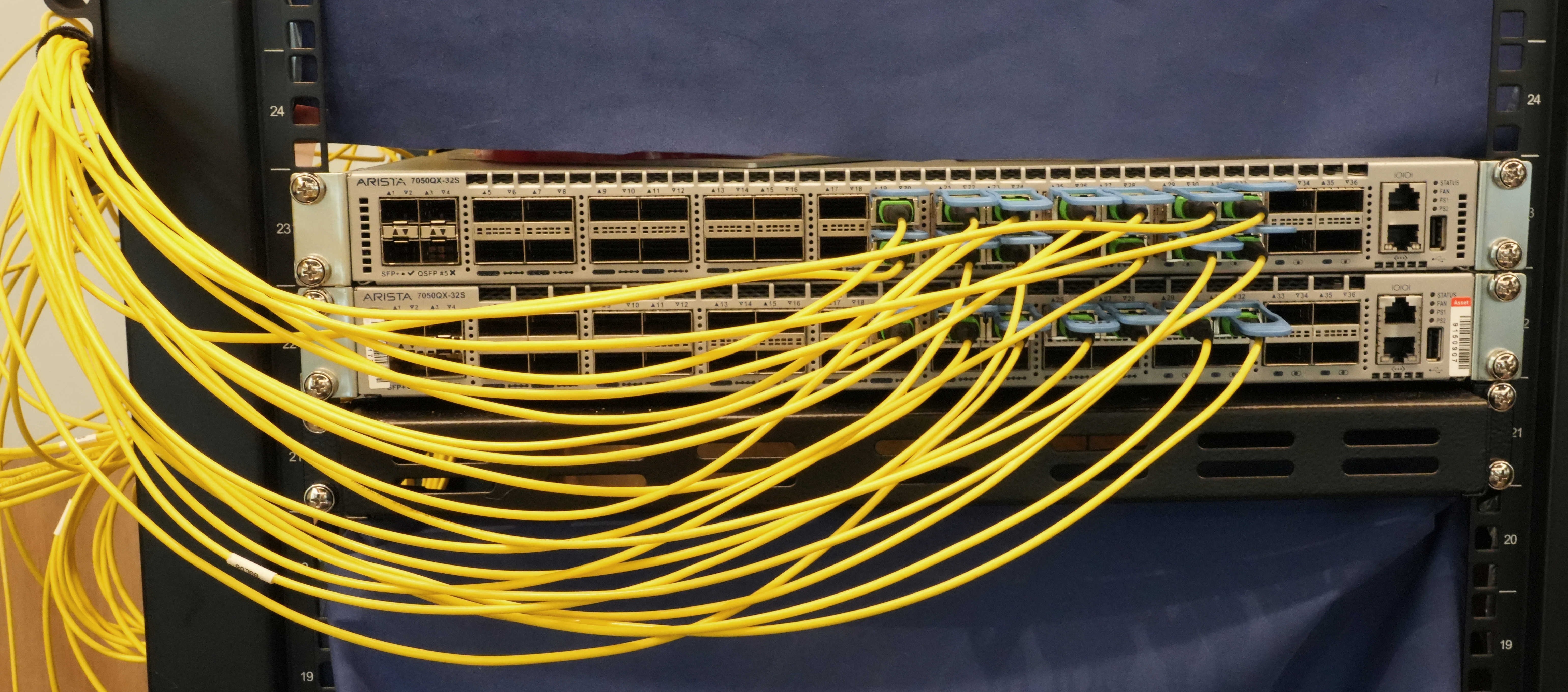
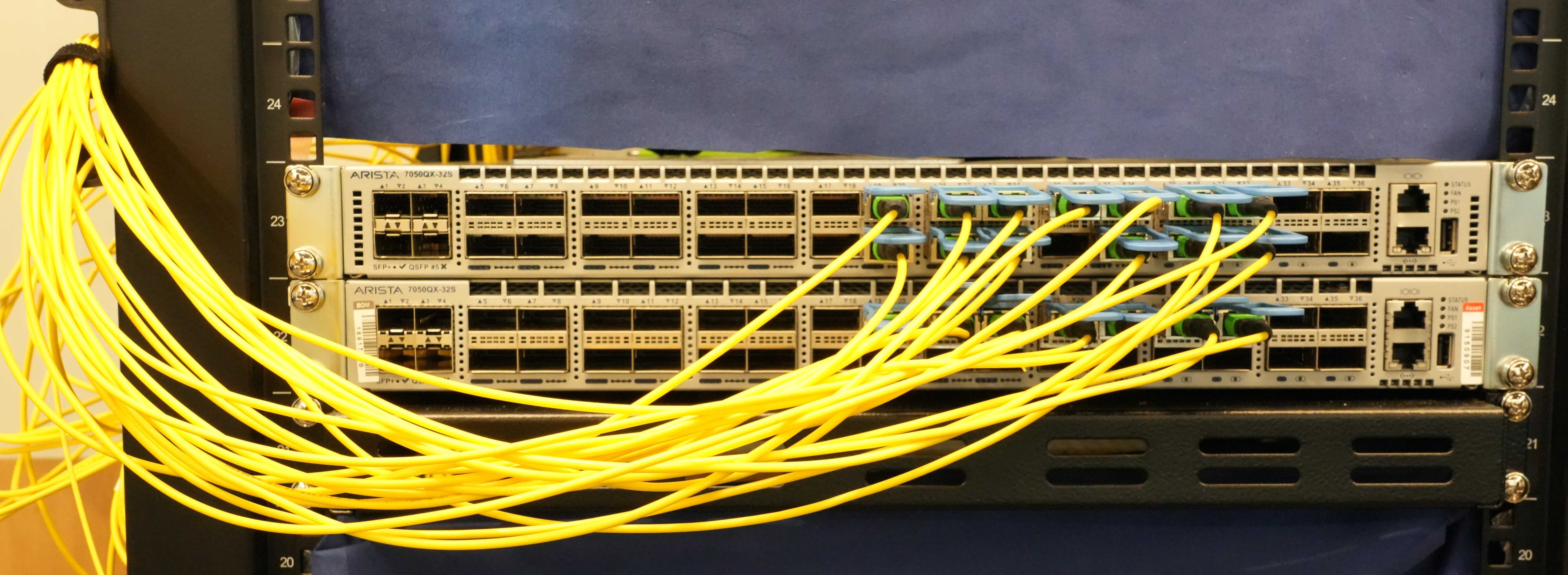
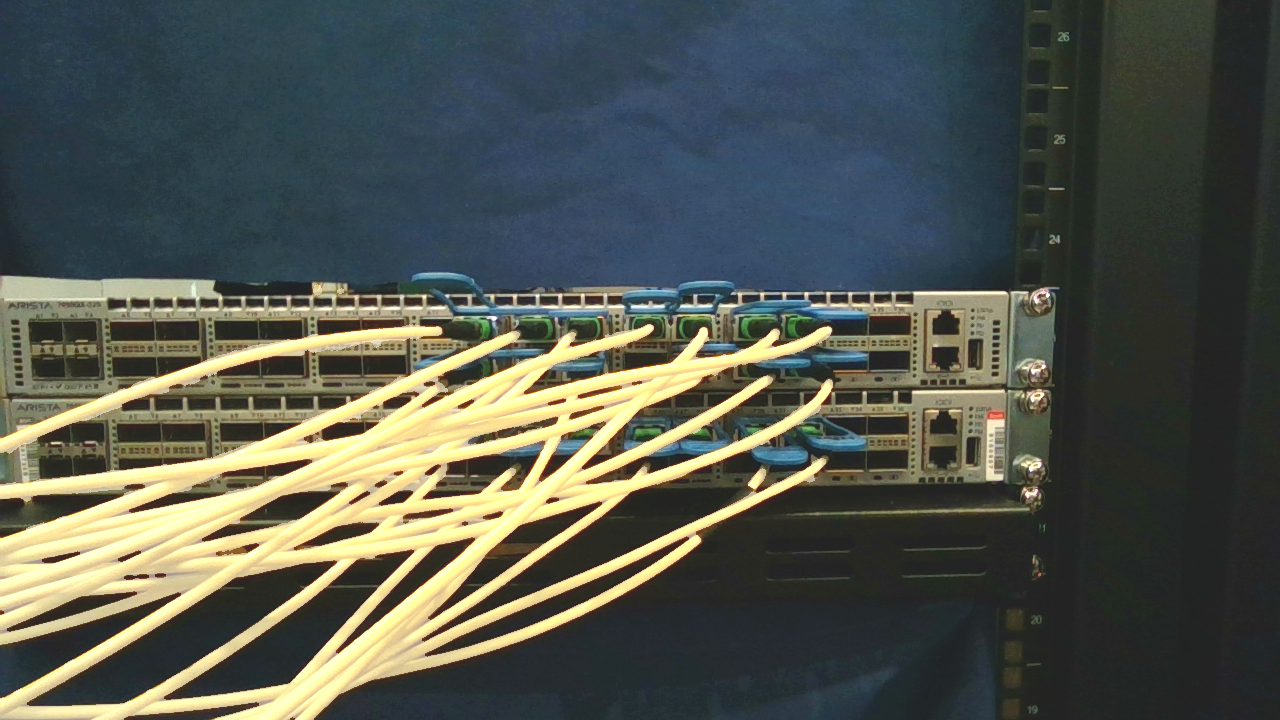
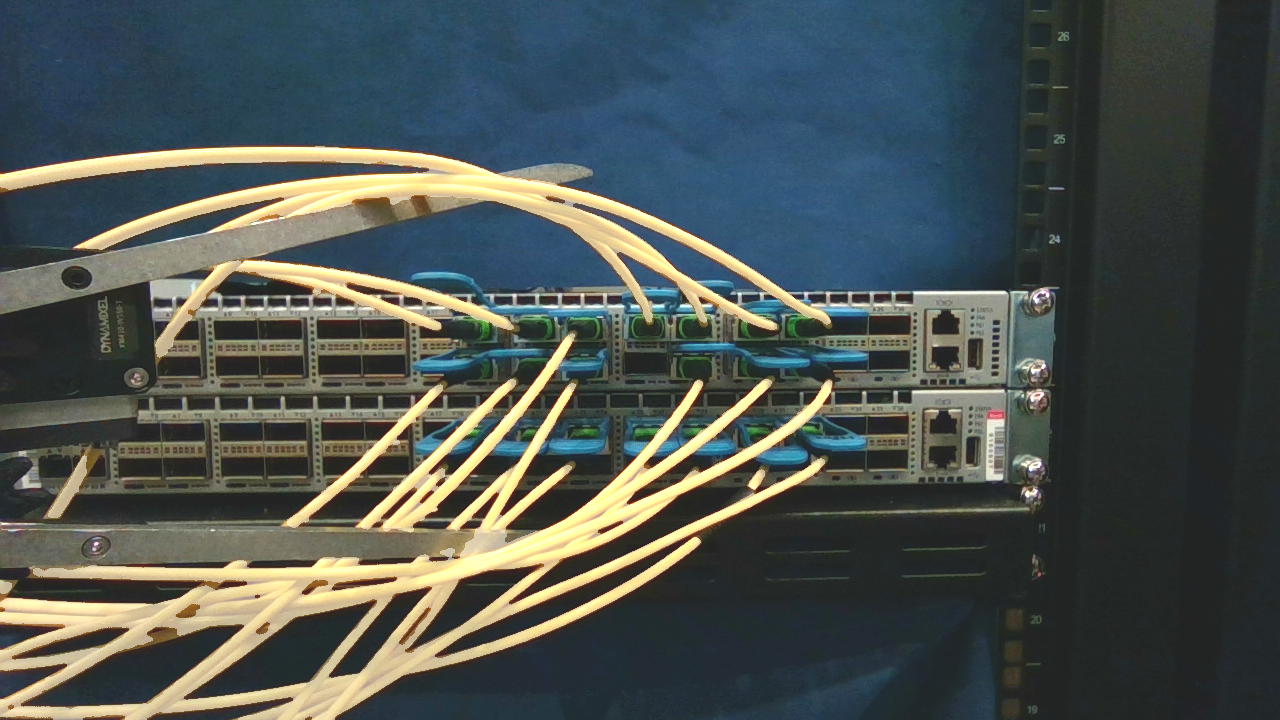
Cable parting: before & after
Results
Standalone decluttering clearance rate (%)
| Policy | Structured | Semi-Chaotic | Chaotic | All |
|---|---|---|---|---|
| P1 | 93 | 80 | 0 | 57.7 |
| P2 | 73 | 67 | 7 | 49.0 |
| P3 | 100 | 100 | 93 | 97.7 |
| P4 | 100 | 100 | 100 | 100 |
Policies without Comb (P1, P2) collapse in chaotic clutter, while P3 and P4 achieve near-perfect clearance across all environment classes.
Full task: declutter + insert
| Policy | Parting clearance | Insertion success | Full task success |
|---|---|---|---|
| P4 | 93.3% | 78.6% | 73.3% |
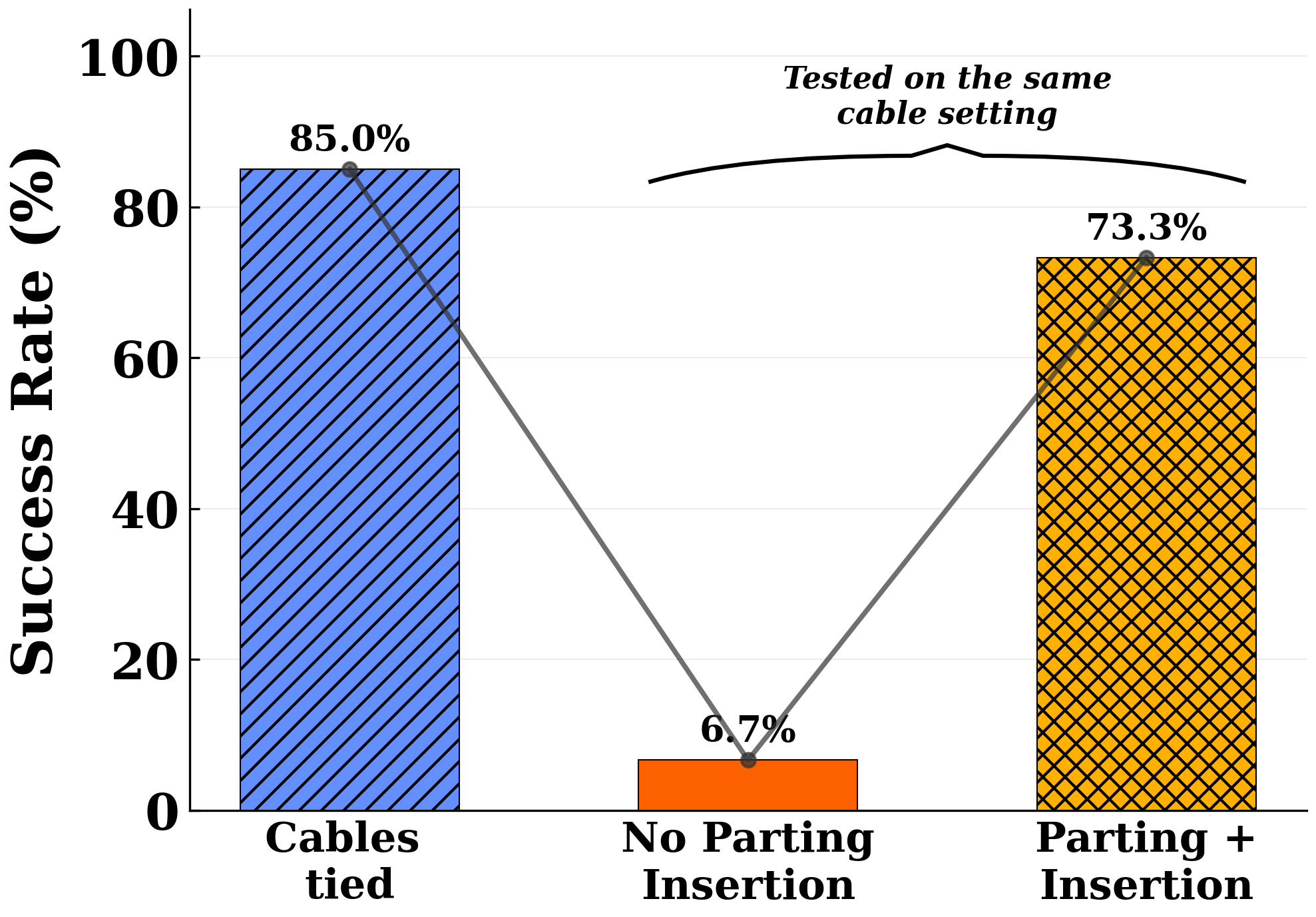
Attempting insertion directly into cluttered ports succeeds only 6.7% of the time. With chopstick decluttering (P4), the integrated pipeline reaches 73.3% end-to-end success — a >10× improvement — recovering most of the insertion capability lost to cable clutter.
Video
Overview of the chopstick cable-parting approach and end-to-end transceiver insertion on the dual-arm UR5e platform.
BibTeX
@misc{khurana2026chopstick,
  title  = {Chopstick-Inspired Non-Prehensile Manipulation for Datacenter Automation},
  author = {Khurana, Harshit and Hogg, Elliott and Hong, Freddie and
            Sarantopoulos, Iason and Otto, Fabian and Andrussow, Iris and
            Williams, Hugh and Deegan, Tim and Sweeney, David and
            Chatzieleftheriou, Andromachi},
  year   = {2026}
}